Wubi News

Should Europe wean itself off US tech?

2025-08-18 08:00:09
The big American tech companies dominate the global cloud-computing sector

Imagine if US President Donald Trump could flip a switch and turn off Europe's internet.

It may sound far-fetched, crazy even. But it's a scenario that has been seriously discussed in tech industry and policy circles in recent months, as tensions with Washington have escalated, and concerns about the EU's reliance on American technology have come to the fore.

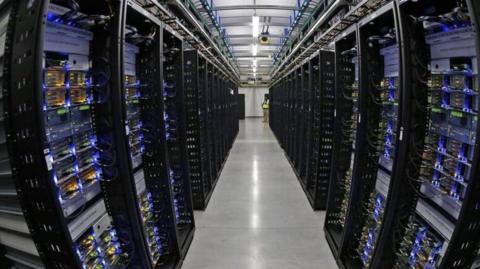
At the root of these concerns is the fact just three US giants - Google, Microsoft and Amazon - provide 70% of Europe's cloud-computing infrastructure, the scaffolding on which many online services depend.

And some question whether an unpredictable US leader would weaponize the situation if relations seriously deteriorated - for example, by ordering those companies to turn off their services in Europe.

"Critical data would become inaccessible, websites would go dark, and essential state services like hospital IT systems would be thrown into chaos," says Robin Berjon, a digital governance specialist who advises EU policymakers.

He believes that concerns over a so called US "kill switch" should be taken seriously. "It's hard to say how much trouble we would be in."

Robin Berjon, a digital governance specialist, says Europe should take the risk of a US "kill switch" seriously

Since then digital sovereignty has shot up the agenda in Brussels, while some public bodies are already seeking alternatives to US providers.

But is it realistic to think they could wean themselves off US technology?

Digital sovereignty is loosely defined as the ability of a governing body to control the data and technology systems within its borders.

One problem faced by those pursuing it is the lack of comparable alternatives.

Europe does have its own providers, such as France's OVHCloud, or Germany's Germany's T-Systems or Delos, in cloud computing.

But they account for a fraction of the market, and don't have the same scale or range of capabilities, says Dario Maisto, a senior analyst covering digital sovereignty at global business consultancy Forrester.

Similarly, open-source alternatives are available for common software packages like Office and Windows, but while proponents say they are more transparent and accessible, none is as comprehensive or well known.

But while moving to sovereign alternatives wouldn't "happen overnight", it's a "myth" to think it's not possible, says Mr Maisto.

He notes that the German state of Schleswig-Holstein is currently in the process of phasing out Microsoft products like Office 365 and Windows in favour of open-source solutions such as LibreOffice and Linux. Denmark's Ministry for Digitalisation is piloting a similar scheme.

"We sometimes overvalue the role of proprietary software in our organisations," Mr Maisto says, pointing out that for key services like word processing and email, open-source solutions work just fine.

"The main reasons organisations don't use open source are a lack of awareness and misplaced fears about cyber security," he adds.

"Our prediction is in the next five to 10 years, there will be an accelerated shift [to these solutions] because of this wake-up call."

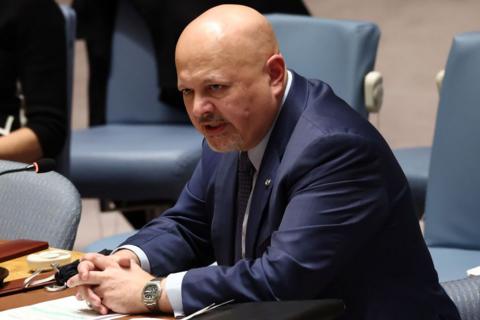
ICC prosecutor Karim Khan lost access to his Microsoft Outlook email account

Zach Meyers, from the Brussels-based Centre on Regulation in Europe (CERRE) think tank, says it might make sense for Europe to develop its own limited sovereign cloud to protect critical government data.

But he adds that it's unrealistic to try to "get Americans out of the supply chain, or to ensure that there's Europeans in the supply chain at each point".

He points to Gaia X - a scheme launched in 2020 to create a European-based alternative to large, centralised cloud platforms, which has faced significant criticism and delays.

"A lot of these [tech] markets are winner takes all, so once you're the first mover it's really hard for anyone else to catch up."

Instead, Mr Meyers thinks Europe should focus on areas of technology where it might gain an edge.

"It could be the industrial use of AI, because Europe already has a much bigger, stronger industrial base than the US has," he says. "Or the next generation of chipmaking equipment, because one of the few areas where Europe has foothold is in photolithography - the machines that make the really top-end chips."

Some say that the EU needs to quickly build up its tech independence

So where does the digital sovereignty agenda go from here?

Some believe nothing will change unless Europe brings in new regulations that force regional organisations and governments to buy local technology. But according to Mr Berjon, the EU has been dragging its feet.

"There is definitely political interest, but it's a question of turning it into a shared strategy."

Matthias Bauer, director at the European Centre for International Political Economy, thinks the goal should be building up Europe's technology sector so it can compete with the US and China.

In a report on EU competitiveness in 2024, Mario Draghi, former head of the European Central Bank, noted Europe is "severely lagging behind" in new technologies, and that "only four of the world's top 50 tech companies are European".

"It's currently much harder for a tech company based in the EU to scale across the bloc than it would be for the same company in the US," Mr Bauer says.

"You not only face different languages, but different contract law, labour market laws, tax laws, and also different sector-specific regulation."

As for the theory that President Trump might flip a "kill switch" and turn off Europe's internet, he's highly sceptical.

"It would be a realistic scenario if we were close to a war, but I don't see that on the horizon."

Yet Mr Maisto says organisations must take the risk seriously, however remote.

"Two years ago, we didn't think we would be talking about these topics in these terms in 2025. Now organisations want to get ready for what might happen."