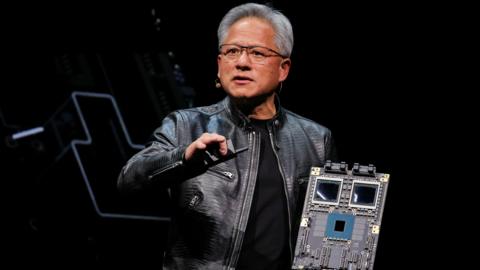
The resumption of chip sales to China comes as trade tensions between Beijing and Washington have been easing.
Beijing has relaxed controls on rare earth exports, while the US has lifted restrictions on chip design software firms operating in China.
In May, the world's two biggest economies agreed to a 90-day truce in their tariffs war.
Since then, top trade officials from both sides have met on a number of occasions, although an agreement to extend the tariffs pause has not yet been confirmed ahead of a 12 August deadline.
As part of his trade policy, Trump has put pressure on major companies to make more investments in the US.
Last week, Apple said it would invest another $100bn (£74.4bn) in the country, adding to a previous pledge to spend $500bn in the US over the next four years.
In June, memory chip maker Micron Technology said its planned US investments will total $200bn. That includes construction of a new manufacturing facility in Idaho.
Nvidia itself has announced plans to build AI servers in the US worth up to $500bn, pledging to build the first AI supercomputers that are entirely American-made.
Meanwhile, the Wall Street Journal reported that the boss of Intel will meet with Trump at the White House after the president called for his immediate resignation due to his ties to China.
Last week, Trump said on social media that Lip-Bu Tan was "highly conflicted", apparently referring to his alleged investments in companies that the US said were tied to the Chinese military.
Mr Tan pushed back, stating it was "misinformation".