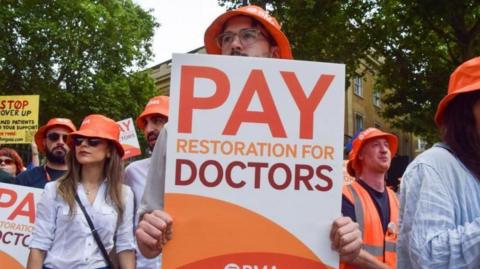
Shortly after the election, Streeting reached a deal with resident doctors that saw a pause to industrial action.
It led to a 22% increase in pay over a two-year period. They have been given another 5.4% average rise this year, but the BMA renewed strike action arguing that was not enough since pay was still a fifth lower than it was in 2008.
In his letter on Wednesday, Streeting said the latest strike action was "deeply disappointing" and "entirely unnecessary" given talks that had started could have made substantive improvements to the working lives of doctors.
He said the strike had had a detrimental impact on patients.
And Streeting added: "Your action has also been self-defeating, because you have squandered the considerable goodwill you had with me and this government."
But he said his door remained open, adding he was happy to meet early next week.
BMA resident doctor co-chairs Dr Melissa Ryan and Dr Ross Nieuwoudt said they were looking forward to returning to the talks with the health secretary.
"We hope this time he feels able to bring to the table a more detailed offer of settlement that is tangible and acceptable."
It is not yet clear the scale of disruption to health services caused by the latest strike.
The NHS has attempted to keep most of the non-urgent work going, such as knee and hip operations.
Some hospitals reported they were able to do more than 80% of their normal activity – previously it had been as low as 50%.
Resident doctors represent nearly half the medical workforce and range from doctors fresh out of university through to those with up to a decade of experience.