So what might hold back aluminium?
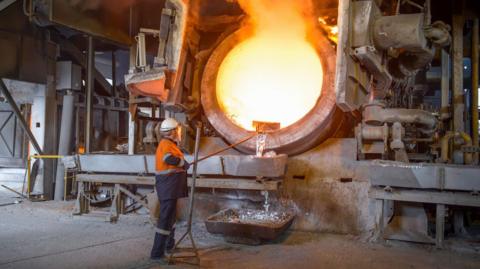
Producing new aluminium is energy intensive. It requires almost twice as much energy to produce as glass.
Calculating the environmental impact of aluminium versus glass is complicated and often the best choice depends on what is being shipped.
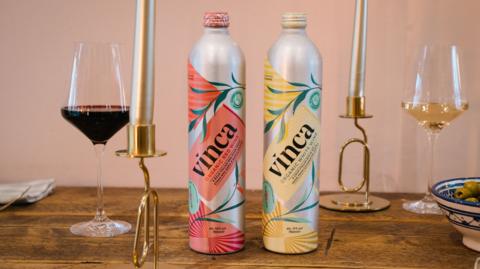
Price is definitely a factor, according to Mark Lansley, the owner and chief executive of Broadland Drinks, which supplied the aluminium-bottled wine to Aldi, and has another similar launch planned this year.
Aluminium, explains Mr Lansley, is a third lighter than glass, saving about 900 grams of CO2 emissions - but is four times more expensive.
He admits to absorbing the extra cost alongside Aldi in the name of innovation, but says that aluminium becoming more widely adopted relies on its cost coming down.
"We've got to get over this cost. We've got to sell the benefits and better spell out the lower carbon footprint that aluminium has," says Mr Lansley.
Consumers will also need to adapt to different looking packaging.
Mr Lansley says the wine industry already tackled this challenge when it introduced screw tops, but when it comes to packaging, there are just some situations where only a glass wine bottle will do.
"Aluminium bottles are lighter and don't shatter, so they are much better for a picnic, or by the pool. But then you've got tradition, and what folks are used to.
"You might be opening a bottle of wine to celebrate with friends, or as a reward and relaxation. A glass bottle of wine is embedded in that culture," says Mr Lansley.