Most people are inclined to shoo flies away from food, and the thought of maggots in your bins is enough to make anyone's stomach turn.
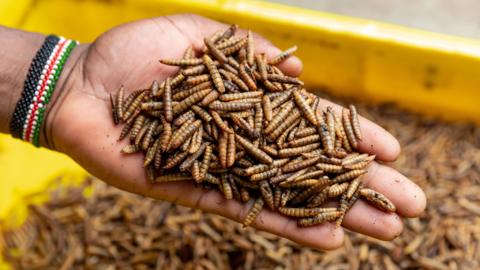
But a handful of city councils have embraced maggots - more formally known as fly larvae - and their taste for rotting food.
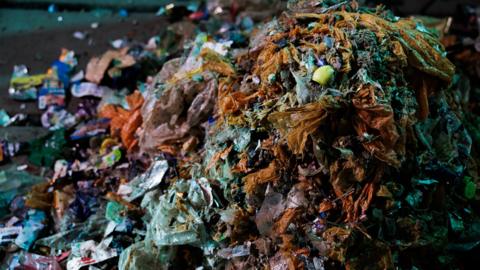
In Vilnius, capital of the Baltic state of Lithuania, fly larvae have officially been given the job of processing the 2,700 tonnes of food waste the city's 607,000 residents put out for collection each year, alongside that of the six neighbouring councils.
Energesman, the waste management company that began relieving Vilnius of its food waste earlier this year, doesn't actually charge the city for this service.
That is saving the city up to €2m (£1.7m; $2.3m) per year, based on a target of processing 12,000 tonnes in 2026 says the company's chief executive, Algirda Blazgys.
Energesman has rolled out new orange food waste bags to residents, alongside an influencer marketing campaign to encourage more Vilniečiai to separate their food waste, as the 2,700 tonnes collected is only a fraction of the 40,000 tonnes of household waste the city is thought to generate.
Last year it become mandatory for councils to collect food waste, so the city needs to find ways to deal with it.
Energesman, meanwhile, has plans to turn the fattened fly larvae into a new income stream.
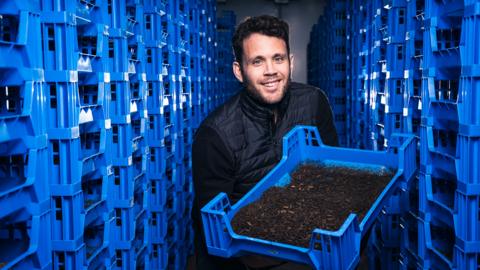
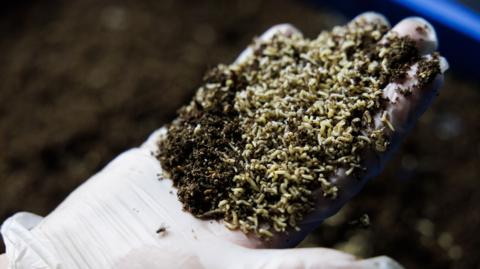
It houses around six million flies in a special zone within its Vilnius plant, who mate around every six hours, according to CEO Algirdas Blazgys.
A female fly can lay around 500 eggs in her average 21-day lifespan, so Mr Blazgys and his team are dealing with more than three million larvae a month, who can consume more than 11 tonnes of food waste in the first, hungriest days of their lives.