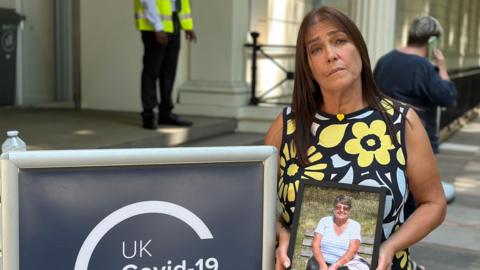
The barrister to the inquiry Jacqueline Carey KC set out the scope of the hearings, warning this section would undoubtedly be "emotive and distressing for many people participating in, and following, these proceedings".
Ms Carey also highlighted Every Story Matters testimony from care home workers.
She quoted a worker at a Durham care home who described how the virus "spread like wildfire".
"At one point, 67 out of 87 residents tested positive, as well as a high percentage of our staff.
"We were all terrified we would take the virus home to our families," the care worker said.
In particular, Ms Carey said the inquiry would investigate understaffing in care homes and the plight of care workers, many of whom were on the national minimum wage, and also migrant workers.
Even before the pandemic, the state of the care sector "was fragile", Ms Carey told the hearing.
Covid testing capacity was extremely limited, particularly at the start of the pandemic where testing was limited to people who had symptoms.
The inquiry will also look at the shortage of personal protective equipment (PPE) in care homes.
Not only were supplies of PPE very hard to get, there were issues of whether staff had been trained to use it and, when it finally arrived, some of it was not fit for purpose, with straps that kept breaking, for example.
This part of the inquiry is expected to last five weeks.
It will hear evidence from bereaved relatives, disabled people, care worker associations and organisations representing care providers, as well as trade unions and local government.