During the pandemic, Matthew started looking for answers to niggling questions about his family history. He sent off a saliva sample in the post to be analysed.
The genealogy company entered his record into its vast online database, allowing him to view other users whose DNA closely matched his own.
"Half of the names I'd just never heard of," he says. "I thought, 'That's weird', and called my wife to tell her the old family joke might be true after all."
Matthew then asked his dad to submit his own DNA sample, which confirmed he was even more closely related to the same group of mysterious family members.
Matthew started exchanging messages with two women who the site suggested were his father's cousins. All were confused about how they could possibly be related.
Working together, they eventually tracked down birth records from 1946, months after the end of World War Two.
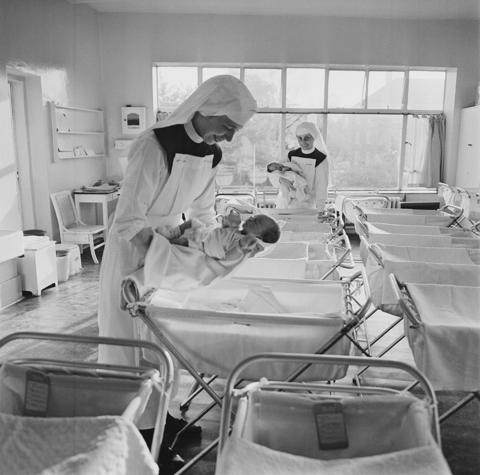
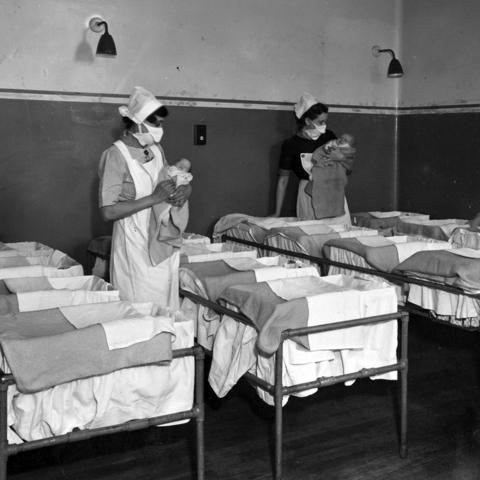
The documents showed that one day after his father was apparently born, another baby boy had been registered at the same hospital in east London.
That boy had the same relatively unusual surname that appeared on the mystery branch of the family tree, a link later confirmed by birth certificates obtained by Matthew.
It was a lightbulb moment.
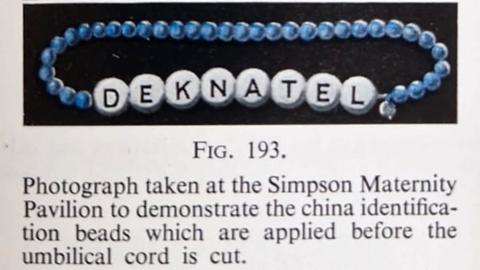
"I realised straight away what must have happened," he says. "The only explanation that made sense was that both babies got muddled up in hospital."
Matthew and the two women managed to construct a brand new family tree based on all of his DNA matches.
"I love a puzzle and I love understanding the past," he says. "I'm quite obsessive anyway, so I got into trying to reverse engineer what had happened."