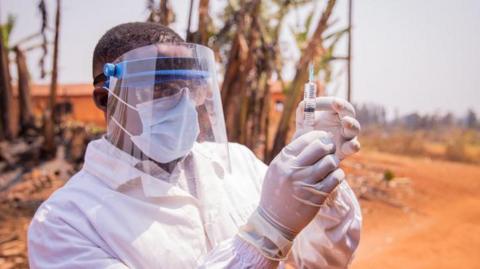
Researchers say this is the first comprehensive study to assess the impact of emergency vaccination programmes in response to the outbreak of five infectious diseases – Ebola, measles, cholera, yellow fever and meningitis.
They studied 210 different incidents from 2000 to 2023, covering 49 different countries.
The vaccine roll-outs seem to have had an impressive impact, reducing deaths by nearly 60%.
The number of overall cases of these infections were also reduced by nearly 60%.
The swift deployment of vaccines also appears to have halted wider outbreaks.
There were economic benefits too – worth an estimated $32 billion.
These benefits come mainly from averting deaths and years of life lost to disability.
But researchers believe this could be a significant underestimate of overall savings, as it doesn't take into account the costs of dealing with a wider outbreak, or the economic disruption caused by a more serious health emergency.
It's believed the 2014 Ebola outbreak, which occurred before the existence of an approved vaccine, is estimated to have cost West African countries alone more than $53 billion.