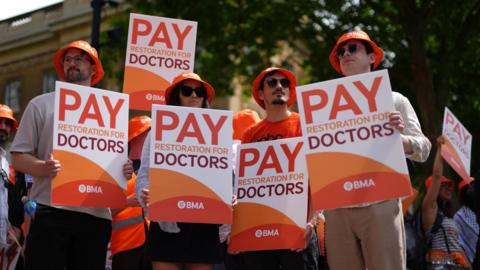
However, NHS England and Streeting said they would be looking to limit the impact of the strike.
Streeting said: "There is no getting around the fact that these strikes will hit the progress we are making on turning the NHS round but I am determined to keep disruption to patients to a minimum."
Senior doctors are being brought in to cover for resident doctors.
In previous strikes, the focus has been on staffing emergency care - but this time the NHS wants to keep non-urgent services going as much as possible.
NHS England has told hospitals to only cancel routine care, such as hip and knee operations, in exceptional circumstance.
Patients in need of emergency medical care should use 999 or present at A&E as normal, or use 111 online as first port of call for urgent but not life-threatening issues during the strike, NHS England advised.
Prof Meghana Pandit, of NHS England, said: "It's really important to reduce cancellations, because people have been waiting, sometimes for months for their routine hip replacement or hysterectomy or any appointment, and actually rescheduling the appointments impacts on them and leads to physical and psychological harm."
Previous walkouts have led to mass cancellations with more than a million appointments and treatments cancelled during the resident doctor strikes which began in March 2023.
Then, some hospitals were only able to deliver half their normal amount of routine care on strike days.
But NHS sources said, this time, some hospitals were planning full schedules.
But Prof Pandit said it was inevitable there would be some disruption.
The BMA has written to NHS England to warn it is risking safety by spreading staff too thinly.