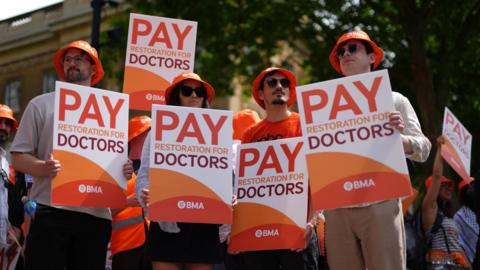
BMA leader Dr Tom Dolphin said: "We are very sorry that strikes have become necessary and of course if people have emergencies or need urgent care they should still present to the hospital or their GP as usual, as they always would.
"Striking is something that doctors don't want to have to do," he said, adding that the walkouts could have been avoided if "a real pathway" had been made on restoring the "lost value" of pay.
He said the BMA was still open to further discussions about resolving the dispute.
The strike is going ahead after talks between the government and BMA broke down on Tuesday.
During five days of talks the two sides discussed extra financial support for resident doctors to cover the cost of exam fees and equipment as well as faster career progression.
The BMA asked for a scheme to help write off student loans, but the government rejected this.
Ahead of the talks, Health Secretary Wes Streeting made it clear he would not revisit this year's pay award.
Resident doctors were given an average rise of 5.4% - and this came after an increase of more than 20% over the previous two years.
Meanwhile, NHS managers have also criticised what they say are inflated shift rates being requested by senior doctors to provide cover for striking resident doctors.
Daniel Elkeles, of NHS Providers, which represents health managers, said the strike would be a "crushing blow" for patients.
He said another "huge worry" was the cost, saying the BMA had recommended senior doctors ask for "inflated rates" that were "simply unaffordable"
The BMA has recommended senior doctors insist on premium rates that for consultants can exceed £300 an hour for night shifts.
This can mean they can earn three times what they normally would.
The BMA said doctors needed to be incentivised to take on this extra work.