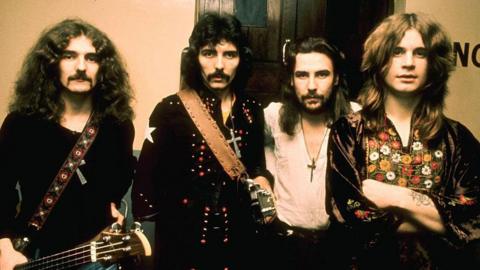
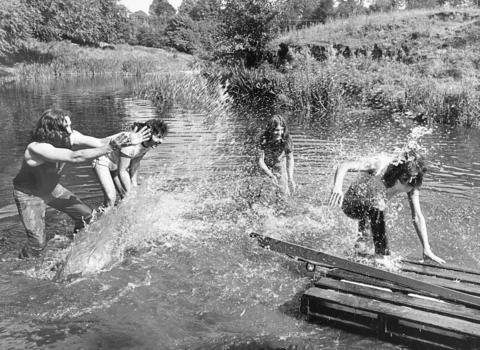
Still, Sabbath leaned into their reputation, writing darker material and gaining a reputation as hellraisers as the 70s wore on.
But the music was never as basic or one-note as their image suggested.
Their second album, Paranoid, marked a seismic leap in songcraft, from the visceral anti-war anthem War Pigs, to the creeping intensity of the title track, via the sci-fi horror of Iron Man, and the ghostly balladry of Planet Caravan.
They kept up the pace on 1971's Master of Reality, with Osbourne describing Children Of The Grave as "the most kick-ass song we'd ever recorded".
Vol 4, released in 1972, is sometimes overlooked because of its lack of a big radio single, but it also contains some of the band's best and most varied work.
Snowblind documents their descent into drug abuse with a depth-charge guitar riff; while St Vitus' Dance is a surprisingly tender piece of advice to a heartbroken friend, and Laguna Sunrise is a bucolic instrumental.
Sabbath Bloody Sabbath, meanwhile, was written as a furious critique of a music industry that had written them off.
"The people who have crippled you / You want to see them burn."
After 55 years, and hundreds of imitators, the revelatory shock of Sabbath's sound has dimmed. How else do you explain Osbourne and Iommi performing Paranoid at Queen Elizabeth II's Golden Jubilee in 2002?
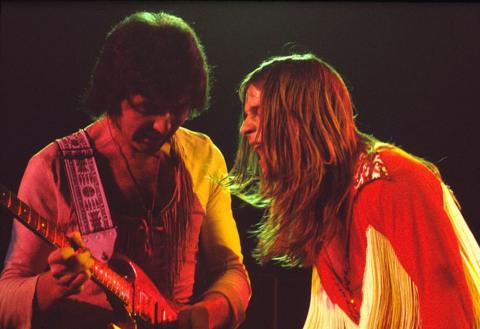
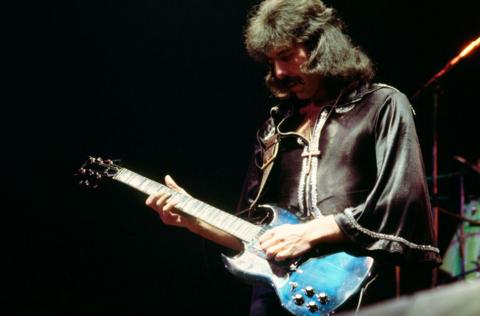
But the power of those songs, from Iommi's brainsplitting riffs to Osbourne's insistent vocal wail, is indelible.
When he inducted Black Sabbath to the Rock and Roll Hall of Fame, Lars Ulrich of Metallica said, "if there was no Black Sabbath, hard rock and heavy metal would be shaped very differently".
"When it comes to defining a genre within the world of heavy music," he said, "Sabbath stand alone."
Writing after the band's penultimate farewell show in 2017, Osbourne said he was humbled by the acclaim.
"I never dreamed we would be here 49 years later," he said.
"But when I think about all of it, the best thing about being in Black Sabbath after all these years is that the music has held up."