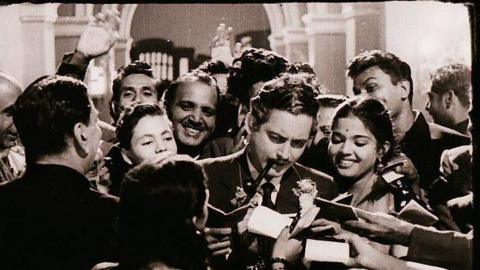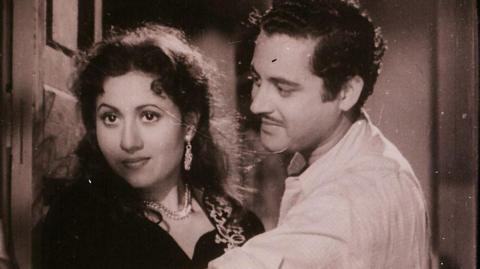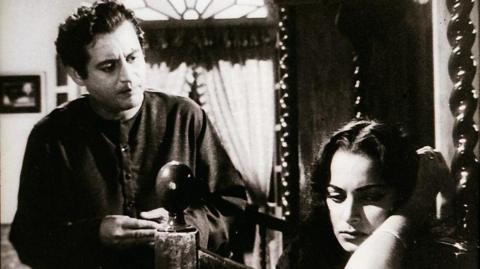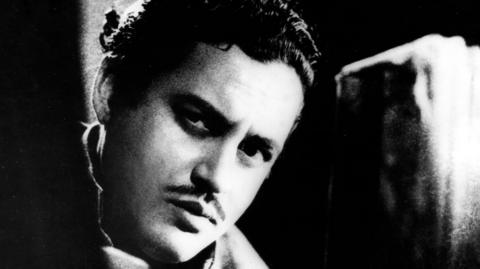
Iconic Indian director and actor Guru Dutt was just 39 years old when he died in 1964 but he left behind a cinematic legacy that continues to resonate decades later.
Born on 9 July 1925 in the southern state of Karnataka, next week marks his birth centenary. But the man behind the camera, his emotional turmoil and mental health struggles remain largely unexplored.
Warning: This article contains details some readers may find distressing.
The maker of classic Hindi films such as Pyaasa and Kaagaz Ke Phool - film school staples for their timeless themes - Dutt forged a deeply personal, introspective style of filmmaking that was novel in the post-independence era.
His complex characters often reflected his personal struggles; his plots touched upon universal motifs, inviting the audience to confront uncomfortable realities through hauntingly beautiful cinema.
Dutt's beginnings were humble and his childhood was marked by financial hardship and a turbulent family life. After his family shifted to Bengal in eastern India for work, a young Dutt became deeply inspired by the region's culture and it would shape his cinematic vision later in life.
He dropped his surname - Padukone - after entering the Bombay film industry in the 1940s. He made his debut not as a director but as a choreographer, and also worked as a telephone operator to make ends meet. The turbulence and uncertainty of the decade - India's independence struggle had intensified - impacted the aspiring filmmaker's prospects.
It was during this phase that he penned Kashmakash, a story rooted in artistic frustration and social disillusionment, ideas that would later shape his cinematic masterpiece Pyaasa.