These women have long worked in the shadows in China, where homosexuality and eroticism are stigmatised. Now outed by police investigations, they face social consequences that are as brutal as the legal ones.
'Every word has come back to haunt me': China cracks down on women who write gay erotica
2025-06-30 12:00:10

Several women say they have been arrested for writing gay erotica, or "danmei"

The crackdown has sparked support from the danmei community online
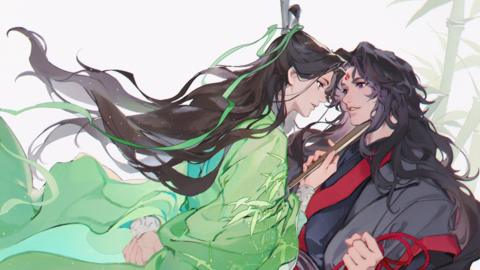
Chinese gay erotica is inspired by Japanese boys' love manga
"In that moment, all I felt was shame," posted a writer whose Weibo handle translates to "the world is a huge psychiatric hospital". She said the police pulled her out of class in college - and her classmates watched as they followed her to search her dorm.
"I earned my money word by word at a keyboard. But once it went south, it was as if none of that mattered. People treated me like I'd made money without ever working for it."
Another wrote the police had been kind, advising her to speak to a lawyer and return her "illegal earnings" to reduce her sentence. "I'm only 20. So young, and I've already ruined my life so early."
A third said: "I never imagined a day would come when every word I once wrote would come back to haunt me."
One author who has been writing danmei novels for 20 years was not questioned but she says the crackdown won't stop her. "This is how I find happiness. And I can't let go of the connections I have made with the community."
Inspired by Japanese boys' love manga, danmei emerged as a sub-genre online in the 1990s. It has become hugely successful, with some of the novels appearing on international bestseller lists.
In 2021, 60 of them were optioned for film and TV adaptations. The most expensive IP reportedly sold for 40 million yuan ($5.6 million; £4.1 million). Some of China's biggest stars, such as Xiao Zhan and Wang Yibo, began their careers on streaming shows based on danmei novels.
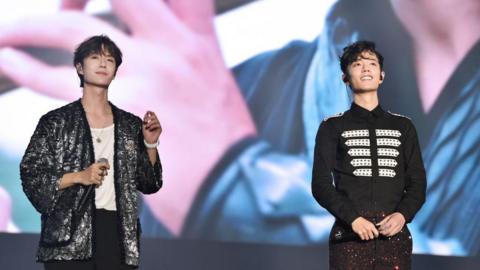
Chinese stars Wang Yibo (L) and Sean Xiao Zhan (R) in 2019, when their show, The Untamed, inspired by a danmei novel, was released

Based on a danmei novel, the 2021 Chinese TV drama Word of Honor had a huge following
It's a problem the community should acknowledge and address, said Ma, a danmei writer who only shared her surname, adding that this is a problem for all adult content because China does not restrict content by age.
But danmei in particular has increasingly come under attack in the last decade as Beijing launched a series of campaigns to "clean up" the internet. In 2018 a danmei author was jailed for 10 years for selling 7,000 copies of her book titled Occupy.
As marriage and birth rates plummet, and China's leader Xi Jinping encourages a national rejuvenation, so state scrutiny of danmei has ratcheted up, Dr Ge says.
"The Chinese government wants to promote traditional family values and liking danmei novels is seen as a factor in making women less willing to have children," Dr Ge explains.
This is the second wave of mass arrests in less than a year - late last year, some 50 Haitang writers were prosecuted. A famous author who earned about 1.85 million yuan was jailed for nearly five years.
The two crackdowns are similar, according to a lawyer who had represented some of the defendants last year, "but this time, even those with minor involvement weren't spared".
A lawyer offering free legal advice said more than 150 people requested consultations in just two days. Many of those contacting her had not been charged yet - they were terrified about the possibility though.
"This is classic offshore fishing," says a lawyer who authored a "practical guide" to assist Haitang writers. The term refers to overreach by local police - those in Lanzhou summoned writers in various places, arguably beyond their jurisdiction.
Several reported paying out of pocket to fly to Lanzhou. One posted that the 2,000 yuan earned from two books on Haitang paid for the flight.
Last year too all the arrests were by police in Jixi County in eastern China.
Indebted local governments have done this before to earn revenue through fines, sometimes forcing a warning from the central government. Cyber crimes are particularly prone to this "as long as they claim a local reader was corrupted", the lawyer says.
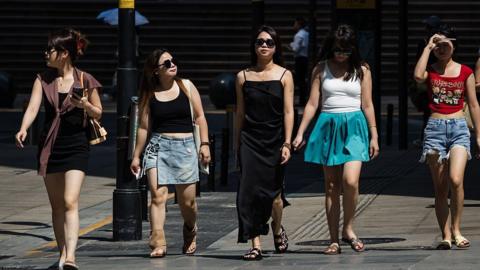
Young Chinese women are opting out of marriage and motherhood - and Beijing hopes to change that by promoting traditional family values
Danmei writers know tolerance can be fickle. It's why they skirt censorship with metaphors. "Making dinner" means sex; "kitchen tool" is code for male genitals.
Still, the recent crackdown stunned them. "A phone call shattered my dreams," is how one writer described the call from police.
They accused police of searching their phone without a warrant. They said their crime was assessed by adding up the views for each chapter - a method they argued was misleading, as it likely exaggerated the readership.
Another danmei author posted: "I wrote on Haitang for years, with only a handful of readers. Then, those overlooked stories accumulated over 300,000 clicks, and the 4,000 yuan in royalties sitting in my account became evidence of my crime."
It's hard to know if this spells the end of their careers on Haitang.
"If I could go back, I'd still choose to write. And I will keep writing," wrote the handle Sijin de Sijin.
"Right now, I can only hope the law will see beyond the words on the page - and see the girl who skipped meals to save money, the girl who sold her hair to buy a pen, the girl who believed her mind could carve a way through fate. I hope it gives all of us a fair chance."
Additional reporting by Grace Tsoi in Hong Kong