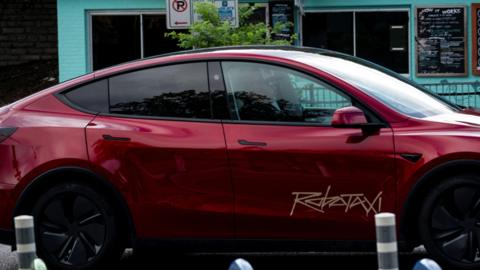
Forrester analyst Paul Miller described the launch of the pilot as a "low-key affair".
"As expected, only a handful of vehicles are available right now, they only operate in a small part of the city and there's a safety driver in the vehicle in case it encounters situations it cannot handle autonomously," he said.
But he added that the move highlighted the company's ambitions to rival firms already offering driverless ride-hailing in the US and around the world.
Waymo, owned by Google parent Alphabet, along with Amazon's Zoox, already offer self-driving taxi rides in Austin, as well as in San Francisco, California, and Phoenix, Arizona.
Meanwhile Uber, which recently announced it would bring forward trials of driverless taxis in the UK, has partnered with Chinese firms Pony.AI, WeRide and Momenta to bring autonomous ride-hailing to more cities outside the US and China.
Mr Miller said Tesla is betting that the volume of cars it delivers, data it has from vehicles and cheaper, camera-based self-driving tech "will allow it to come from behind and pull ahead" of rivals.
But he added that its ability to compete, particularly with Chinese firms dominating the sector, will depend on improvement of its advanced assisted driving system - which Tesla calls Full Self-Driving (FSD).
FSD has been subject to probes by US auto regulators and complaints from customers about its safety.
"If that FSD system isn't a big leap forward from the driver assistance tech that buyers of regular Teslas already use in some countries, it's going to need a lot of remote monitoring and control from an army of teleoperating safety drivers," Mr Miller said.
"This will add to Tesla's costs, and offer plenty of opportunities for embarrassing videos of Tesla robotaxis doing weird things."