Wubi News

Frederick Forsyth: Life as a thriller writer, fighter pilot, journalist and spy

2025-06-10 02:00:17

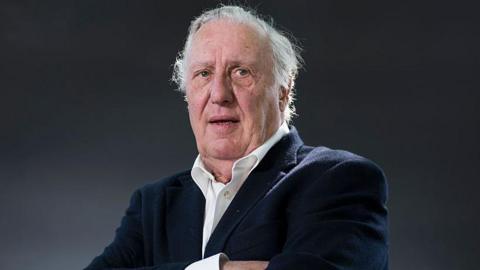
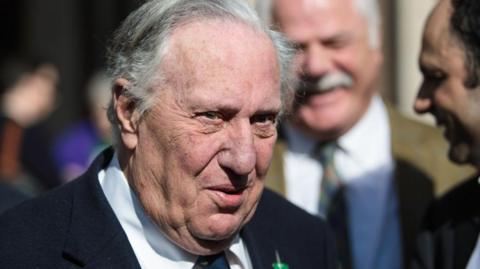
Frederick Forsyth, who has died at the age of 86, wrote meticulously researched thrillers which sold in their millions.

A former fighter pilot, journalist and spy, many of his books were based on his own experience.

He wove intricate technical details into his stories, without detracting from the lightning pace of his plots.

His research often embarrassed the authorities, who were forced to admit that some of the shady tactics he revealed were used in real-life espionage.

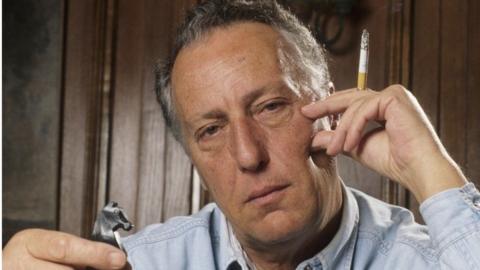
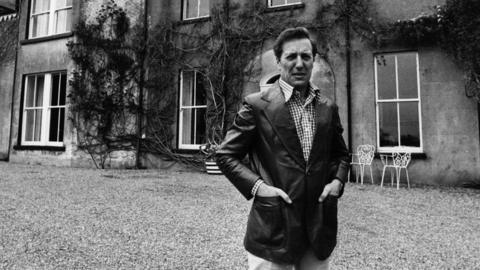
Some of Forsyth's plots were based on the real-life work of spies

Frederick McCarthy Forsyth was born on 25 August 1938 in Ashford, Kent.

The only child of a furrier, he dealt with loneliness by immersing himself in adventure stories.

Among his favourites were the works John Buchan and H Rider Haggard, but Forsyth adored Ernest Hemingway's book on bullfighters, Death in the Afternoon.

He was so captivated that - at the age of 17 - he went to Spain and started practising with a cape.

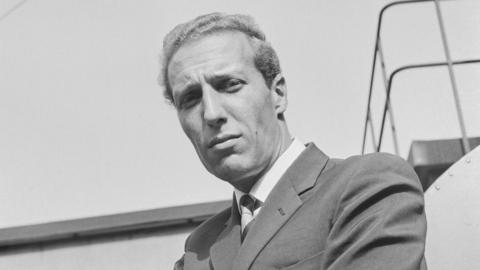
Frederick Forsyth lied about his age in order to become a fighter pilot

He never actually fought a bull. Instead, he spent five months at the University of Granada before returning to do his national service with the RAF.

Having spent years dreaming of becoming a pilot, Forsyth lied about his age so he could fly de Havilland Vampire jets.

In 1958, he joined the Eastern Daily Press as a local journalist. Three years later, he moved to the Reuters news agency.

At Tonbridge School, Forsyth had excelled in foreign languages but little else.

Fluent in French, German, Spanish, and Russian, he was a born foreign correspondent.

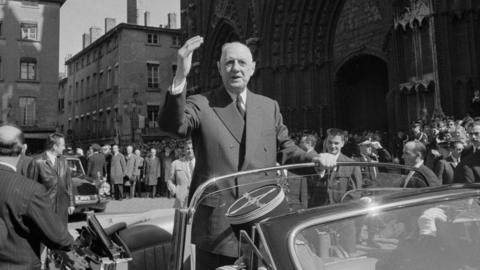
An assassination attempt on French President Charles de Gaulle in 1962 inspired The Day of the Jackal

Posted to Paris, he covered a number of stories relating to assassination attempts on the life of France's President Charles de Gaulle, by members of the Organisation de l'Armee Secrete (OAS).

The group of ex-army personnel were angered at de Gaulle's decision to give independence to Algeria after many of their comrades had died fighting Algerian nationalists.

Forsyth called the OAS "white colonialists and neo-fascists".

And he decided that, if they really wanted to kill de Gaulle, they would have to hire a professional assassin.

Frederick Forsyth wrote The Day of the Jackal in just 35 days
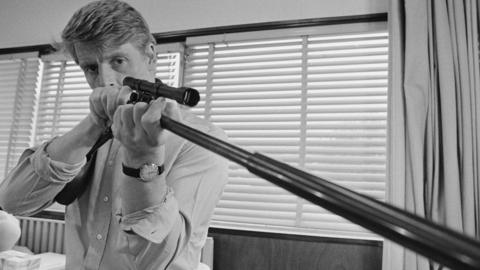
Edward Fox played an assassin attempting to kill President de Gaulle in the film adaptation of The Day of the Jackal

He also become friendly with a number of mercenaries, who taught him how to get a false passport, obtain a gun and break an enemy's neck.

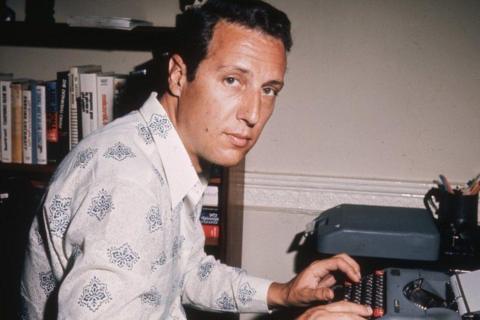
All these tricks of the trade would be incorporated in a tale of an attempted assassination of President de Gaulle, The Day of the Jackal, which he pounded out in his bedsit on an old typewriter in just 35 days.

He spent months trying to get it published but faced a string of rejections.

"For starters, de Gaulle was still alive," he said, "so readers already knew a fictional assassination plot set in 1963 couldn't succeed."

Eventually, a publisher risked a short print run and sales of the book, described once as "an assassin's manual", took off, first in the UK and then in the US.

Frederick Forsyth's The Odessa File helped unmask the real "Butcher of Riga"

The Day of the Jackal showcased what would become the traditional hallmarks of a Forsyth thriller. It wove together fact and fiction, often using the names of real individuals and events.

The Jackal's forgery of a British passport, using the name of a dead child taken from a churchyard, was perfectly feasible in the days before electronic databases and cross-checking.

The tale was made into an award-winning film in 1973, staring Edward Fox as the anonymous gunman.

Frederick Forsyth went undercover to conduct research for his novels

Forsyth followed up his success with The Odessa File, the story of a German reporter attempting to track down Eduard Roschmann - a notorious Nazi nicknamed the "Butcher of Riga" - who is protected by a secret society of former SS men known as Odessa.

As part of his research, Forsyth travelled to Hamburg posing as a South African arms dealer. "I managed to penetrate their world and was feeling rather proud of myself," he later said.

"What I didn't know was that the (contact) had passed a bookshop shortly after our meeting. And there, in the window, was The Day of the Jackal, with a great big picture of me on the back cover."

The film of the book led to the identification of the real "Butcher of Riga", who was living in Argentina - after one of his neighbours went to see it at the local cinema. He was arrested by the Argentinian authorities, but skipped bail and fled to Paraguay.

The book also mentioned a hoard of Nazi gold that was exported to Switzerland in 1944. Twenty-five years after publication, the Jewish World Congress discovered this passage and, eventually, located gold valued at £1bn.

According to the Sunday Times, Forsyth was involved in plans for a coup in Equatorial Guinea in 1972

According to the Sunday Times, Forsyth's third novel, The Dogs of War, drew on his experience of organising a coup in Africa.

The newspaper reported that Forsyth had once spent $200,000 hiring a boat and recruiting European and African soldiers of fortune for a raid designed to oust the President of Equatorial Guinea in 1972.

The plan was said to have failed when the arrangements broke down and the soldiers were intercepted by the Spanish police in the Canary Islands, 3,000 miles from their objective.

Then came Devil's Alternative, in which Britain's first female prime minister, Joan Carpenter, was firmly based on Margaret Thatcher, a politician Forsyth greatly admired. She later appeared, under her real name, in four Forsyth novels.

There was a move into biography in 1982 with Emeka, the life story of Forsyth's friend Col Chukwuemeka Odumegwu Ojukwu, the head of state of Biafra during that country's brief independence.

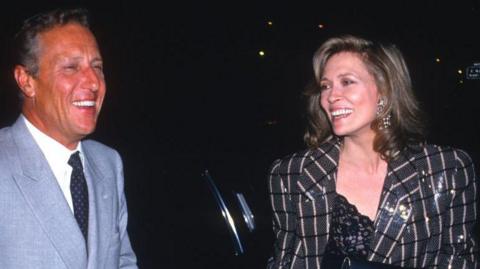
Frederick Forsyth and Faye Dunaway attend the premiere for The Fourth Protocol
Frederick Forsyth came out of retirement to begin a final novel in 2024

On turning 70, the pace of his writing began to slow.

The Cobra, published in 2010, saw the return of some of the characters from Avenger.

In 2013, Forsyth published The Kill List, a fast-moving tale built round a Muslim fanatic called The Preacher, whose online videos encouraged young Muslims to carry out a series of killings.

He wrote all his books on a typewriter and refused to use the internet for his research.

Ironically, his 18th novel, The Fox - published in 2018 - was a spy thriller about a gifted computer hacker.

Forsyth announced it was to be his final book, but he later came out of self-imposed retirement after the death of his second wife, Sandy, in 2024.

He said he was writing another adventure, and even suggested a raffle might give someone the chance to name a character after themselves.

Having sold the film rights for £20,000 in the 1970s, Forsyth received no payment for Eddie Redmayne's version of The Day of the Jackal when it was re-imagined for television last year on Sky.

Well into his 80s, he had long since agreed to stop research trips to far-flung parts of the world - when a trip to Guinea-Bissau left him with an infection that nearly cost him a leg.

"It is a bit drug-like, journalism," he admitted. "I don't think that instinct ever dies."

It was an instinct that made his life as full and exciting as his thrillers.